Light bending near a black hole. Each ray is integrated through the null geodesic equation of Schwarzschild spacetime, d²u/dφ² + u = 3Mu²; rays with impact parameter below 3√3 M are captured, leaving the shadow, rimmed by the photon ring.
Announcements
- 1 September 2026
First Circular
Symposium on Relativistic Astrophysics and 8th Galileo–Xu Guangqi International Academic Conference The Galileo–Xu Guangqi International Academic Conference is a series of high-level meetings launched jointly in 2009 by …
Key Dates
- Abstract submission deadline15 October 2026
- Notification of acceptanceTBA
- Registration deadline15 October 2026
- Hotel booking deadlineTBA
- Registration desk opens2 November 2026
- Meeting opens3 November 2026
- Meeting closes5 November 2026
About this edition
The meetings provide a high-level platform for exchange between East and West in relativistic astrophysics and the related theory, experiment and observation. Organised jointly by China and Italy since 2009, they alternate between the two.
Registration on 2 November; sessions 3–5 November; departure 6 November
Organisers
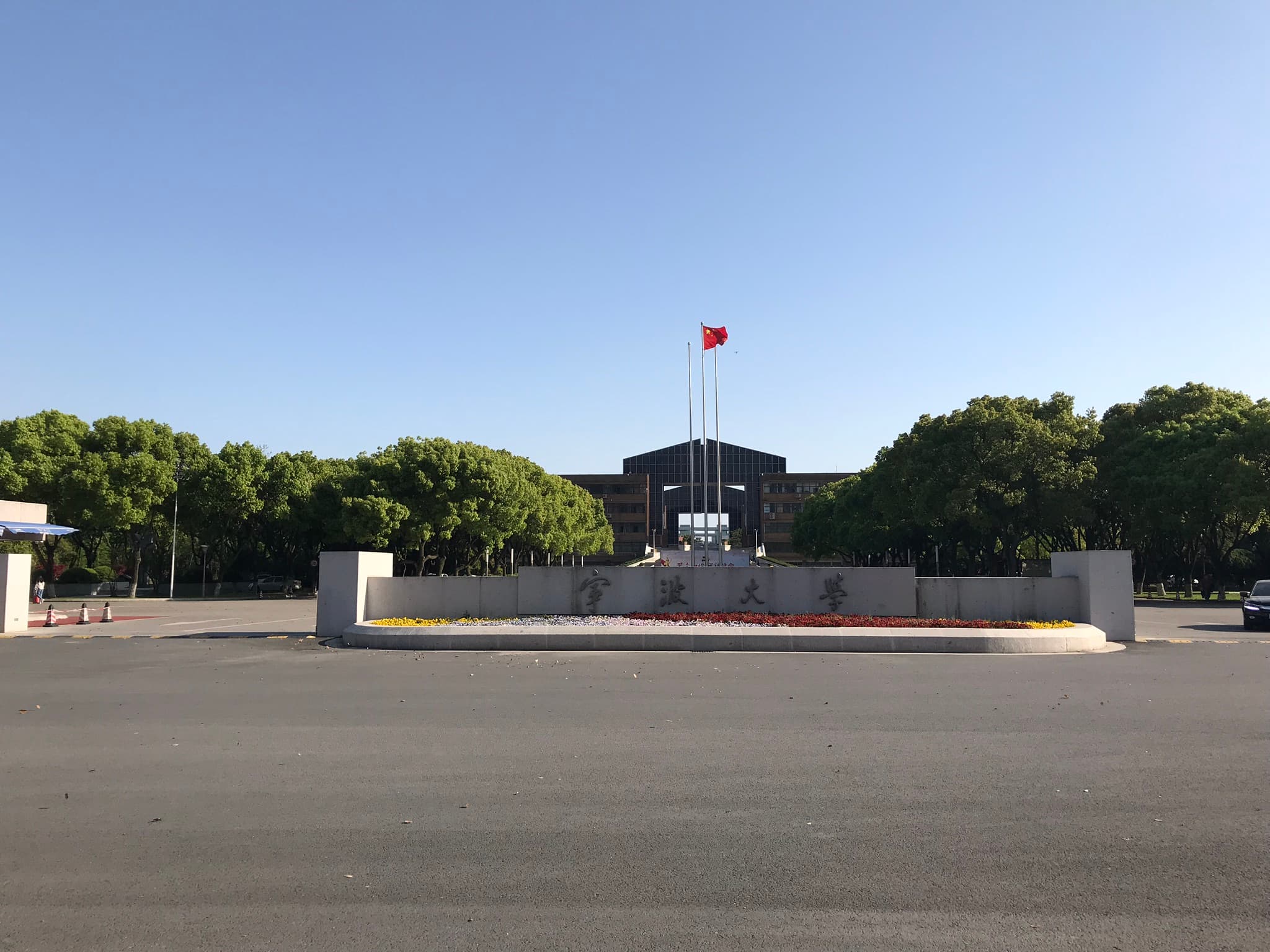
- Ningbo University
- ICRA — International Center for Relativistic Astrophysics
- Institute of Fundamental Physics and Quantum Technology, Ningbo University
Scientific Topics
The meeting covers relativistic astrophysics, with emphasis on but not limited to the following areas.
- Late stages of stellar evolution and explosive processes
- Physics of compact objects: neutron stars, black holes
- Applications of AI in astronomy and physics
- Gamma-ray bursts and their high-energy emission mechanisms
- X-ray and gamma-ray astrophysics
- Gravitational waves and precision tests of general relativity
- Nuclear astrophysics and the equation of state of dense matter
- Accretion processes and jet physics
- Related observational and theoretical advances in high-energy astrophysics
History
A series running for seventeen years
All seven editions