Skip to content

8th · Ningbo 2026

Organisers

This edition is organised jointly by Ningbo University and the Italian International Center for Relativistic Astrophysics Network (ICRANet), and hosted by the Institute of Fundamental Physics and Quantum Technology at Ningbo University. The Galileo–Xu Guangqi series was launched in 2009 by ICRA/ICRANet together with several Chinese research institutions.

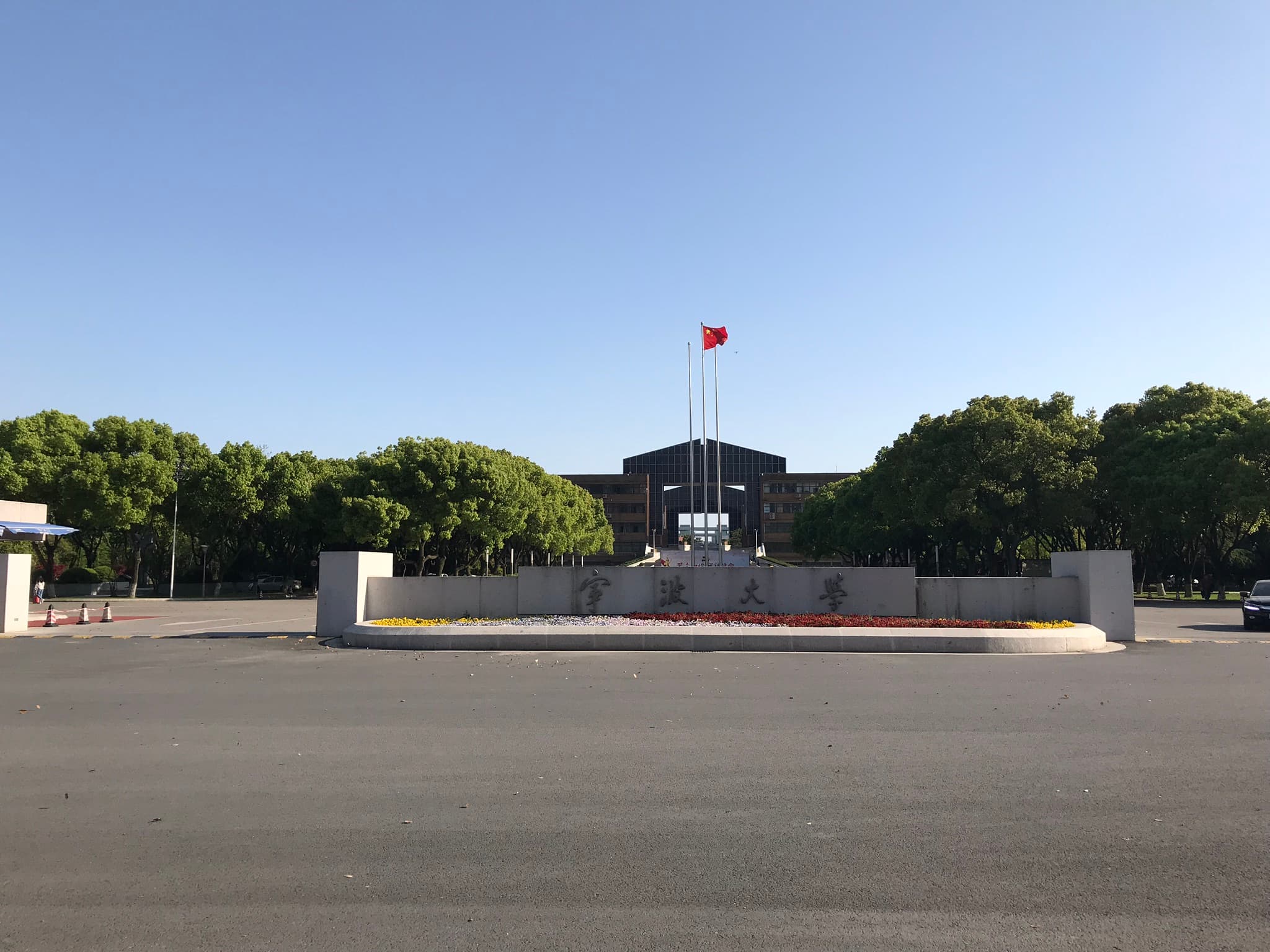
The campus of Ningbo University
The campus of Ningbo University, founded in 1986 with donations from Sir Yue-Kong Pao.Image: Nbfreeh · Wikimedia Commons · CC BY-SA 4.0

Organiser

Ningbo UniversityNBU

Ningbo University (NBU) is a national “Double First-Class” initiative university, jointly established by the People’s Government of Zhejiang Province, the Ministry of Education, and the Ningbo Municipal People’s Government, with support from the State Oceanic Administration. Founded in 1986 with donations from Sir Yue-Kong Pao, the Hong Kong shipping magnate, the university was named and its title inscribed by Mr. Xiaoping Deng.

Through decades of dedicated development, NBU has grown into a comprehensive teaching and research institution, consistently ranked among the top 100 universities in China. It offers disciplines across 12 fields, with 26 colleges and faculties and one independent college, as well as 6 directly affiliated hospitals. Mechanics has been selected as a national “Double First-Class” discipline, Aquaculture is designated as a provincial peak discipline, and Applied Economics is recognized as one of the provincial first-class (Tier A) disciplines. Currently, the Engineering discipline at NBU ranks among the top 0.1% worldwide, and 14 disciplines rank within the top 1% worldwide by Essential Science Indicators. The university offers 13 first-level discipline doctoral programs, 1 professional doctoral program, 32 first-level discipline master’s programs, 31 professional master’s programs, and hosts 9 postdoctoral research stations.

In research, NBU has won 9 National Science and Technology Awards, including 1 second prize of the National Natural Science Award, 2 second prizes of the National Technological Invention Award and 6 second prizes of the National Science and Technology Progress Award, and ranked 401–500 in the 2025 Academic Ranking of World Universities. Adopting an industry-oriented and interdisciplinary model, enterprise-funded projects make up 54% of its research funding, with numerous achievements applied in major engineering projects.

NBU has established partnerships with more than 120 universities and research institutions in over 30 countries. It has been recognized as a Model Institution of Internationalization in Zhejiang Province and a Ningbo Municipal International Cultural Exchange Base. The university runs several Sino-foreign educational programs, including a joint institute with the University of Angers in France, and four MOE-approved programs such as Sino-French undergraduate programs in Clinical Medicine and Mathematics. It also co-operates two Confucius Institutes with the University of Iceland and the University of Antananarivo, Madagascar.

Organiser

International Center for Relativistic Astrophysics NetworkICRANet

ICRANet, the International Center for Relativistic Astrophysics Network, is an international organisation whose purpose is to carry out and to promote research activities and development in relativistic astrophysics and related fields.

Its members are four states — the Republic of Armenia, the Federative Republic of Brazil, the Italian Republic and Vatican City — together with three universities and research centres: the University of Arizona, Stanford University and ICRA. The instrument formally establishing ICRANet was signed in March 2003.

The organisation is headquartered in Pescara, Italy. ICRANet centres currently operate in Pescara and Rome (Italy), Nice (France), Yerevan (Armenia) and Rio de Janeiro (Brazil). Its director is Remo Ruffini.

Committee members: Haik Harutyunian for Armenia; Ademar Seabra da Cruz Junior for Brazil; Yu Wang for ICRA; for Italy, Fabrizio Nicoletti, Alessandra Pastorelli and Immacolata Pannone of the Ministry of Foreign Affairs, Giampaolo Bologna and Antonio Bartolini of the Ministry of Economy and Finance, Vincenzo Di Felice and Giulietta Iorio of the Ministry of Science and Technology, and Marco Alessandrini and Carlo Pace of the Municipality of Pescara; Francis Everitt for Stanford University; Xiaohui Fan for the University of Arizona; and Guy Consolmagno for Vatican City.

Host institute

Institute of Fundamental Physics and Quantum Technology, Ningbo UniversityIFPQT

Established in January 2025, the Institute of Fundamental Physics and Quantum Technology (IFPQT) at Ningbo University is based in the School of Physical Science and Technology. It is a major strategic step in the university’s effort to advance its “Double First-Class” development and to raise its standing as a high-level research-oriented university.

IFPQT is committed to achieving breakthroughs in fundamental physics, quantum technology, and interdisciplinary research involving artificial intelligence. It aims to become a nationally leading and internationally recognized platform for innovation and academic exchange.

The institute is led by Prof. Rong-Gen Cai, an Academician of the Chinese Academy of Sciences (CAS), a Fellow of The World Academy of Sciences (TWAS), and a Fellow of several leading international scientific societies. As of now, it comprises 23 research faculty members and 17 postdoctoral researchers, organised into five main research directions: (1) the nature of gravity and the origin of spacetime; (2) cosmic evolution and the properties of matter; (3) quantum computation and quantum simulation; (4) dark matter detection via spin-polarized quantum precision measurement; (5) big data processing powered by artificial intelligence.

Supporting institution

International Center for Relativistic AstrophysicsICRA

The International Center for Relativistic Astrophysics (ICRA) is an international research institution devoted to relativistic astrophysics and its related fields.

ICRA was founded in 1985 by Remo Ruffini, Riccardo Giacconi (Nobel Prize in Physics, 2002) and Abdus Salam (Nobel Prize in Physics, 1979), together with the University of Rome, the University of Washington, the Vatican Observatory, Stanford University and the University of Science and Technology of China. It became a legal entity in 1991 under Ministerial Decree 22/11/1991 of the Ministry of Education, Universities and Research.

The centre is based in Rome and Pescara, Italy, and is constituted by six universities, four research organisations and a government ministry. Its president is Yu Wang.

Members: Stanford University (USA); the University of Science and Technology of China (China); The World Academy of Sciences (Italy); the Vatican Observatory (Vatican City); the Space Telescope Science Institute (USA); the International Centre for Theoretical Physics, ICTP (Italy); the University of Washington (USA); University Campus Bio-Medico (Italy); the University of Insubria (Italy); the University of Udine (Italy); and the Italian Ministry of Education, Universities and Research.

China and Italy

In 1978 Italy became the first Western country to sign an intergovernmental agreement on scientific and technological cooperation with China. In the decades since, collaboration in astronomy and space science has deepened steadily: the Insight-HXMT hard X-ray telescope, the DAMPE dark matter probe, the CSES/Zhangheng-1 satellite carrying the Italian-built high-energy particle detector Limadou, the China Jinping Underground Laboratory, and the China–Europe SVOM mission all involve scientists from both countries.

Origins